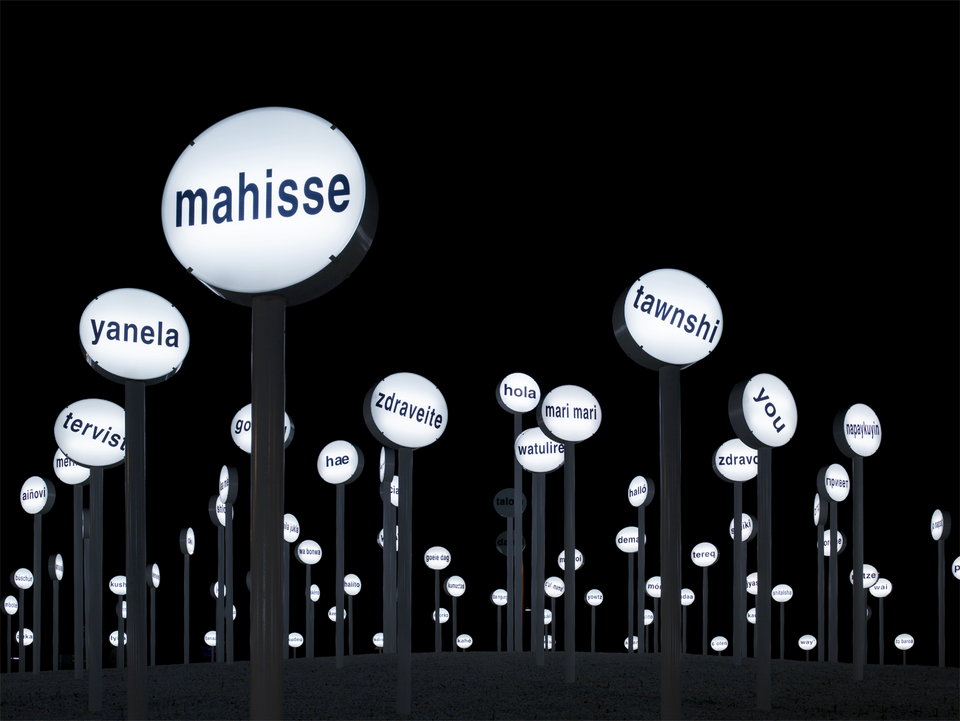
Hello. Roundabout
“QUI GRATUM DAT AVE, RESPONSUM FERTQUE SUAV”
Carmen Hernández González
‘He who offers a pleasant greeting receives a pleasant response.’
The phenomenon of multilingualism and, therefore, multiculturalism in today’s world is an undeniable reality. Linguistic communities do not exist in isolation from one another, hence the importance of examining how they interact and the consequences of such interaction: some languages become stronger, while others decline or even die out. This contact between languages is also the subject of study in various related disciplines: ethnolinguistics and linguistic anthropology (which analyse the ethnological and cultural determinants of communication and language use), sociolinguistics (correlation between variables of linguistic use and variables of a sociological nature) and psycholinguistics (mental processes experienced by bilingual or multilingual individuals compared to monolingual individuals), which highlights the importance and difficulty of understanding this subject.
The starting point is the undeniable observation that multilingualism is a normal phenomenon in all countries around the world: the existence of different languages is evident, as is the process of differentiation of one language into several. Dialectalisation throughout history and the migratory movement of peoples are the two main causes of diversity. The changes occur around three fundamental axes: temporal (over time), geographical (from one place to another) and social (according to the socio-cultural levels of the speakers). As a result of these changes, differences, distances, similarities and contacts between languages appear.
Conflicts and agreements between languages and cultures are, in essence, nothing more than antagonisms and consonances between human beings, between groups of speakers. It is human action that allows the systems and uses of languages and their cultures to be realised. Therefore, finding forms of communication that allow understanding and harmony between all is fundamental to creating bonds of solidarity, concord and freedom. The greeting is, therefore, an element of welcome that indicates a positive attitude towards the person who approaches us. Each culture has different codes to express this intention of hospitality, of acceptance of the other; to indicate that there is a favourable climate towards the newcomer, to make the absence of conflict visible: a smile, a hug or a handshake reveal our desire to welcome and distinguish those who receive it.
But, in addition, there are words. A simple ‘Hello!’—once an expression used to address an inferior or to denote strangeness, and today a colloquial greeting—indicates that we recognise the person to whom we offer it…